

Last Updated: November 5, 2026
Quick Summary
The niche vs designer difference comes down to who controls the scent and how widely it sells, not to some magic ingredient tier. Designer fragrance is a mass-market product built for broad appeal and sold through large distribution networks, while niche fragrance is artisan-scale perfumery, often perfumer-led, made in smaller batches for narrower tastes.
- Designer releases move through huge batch production and global distribution networks, while niche houses run smaller runs with tighter shelf turnover.
- Higher price does not automatically mean higher fragrance concentration, and it never has.
- Concentration is a formulation choice, not a category badge, and ranges overlap between designer and niche releases.
- Scent longevity depends on concentration, base notes and skin chemistry rather than on the niche label.
- Major fashion houses now run premium private lines that behave like niche houses, blurring the old shortcut.
Table of Contents
- What Niche and Designer Labels Actually Mean
- Production Scale, Marketing Budgets, and Who Actually Creates the Scent
- Niche vs Designer Fragrance Examples You Can Actually Smell Side by Side
- Price, Concentration, and the Price-to-Value Ratio
- Best Long Lasting Niche Perfumes and What Longevity Really Depends On
- Niche vs Designer vs Dupe: Where the Copycats Fit
- Niche Perfume Brands Worth Knowing and the Masstige Lines Blurring the Line
- Try Before You Commit With a Decant
- Frequently Asked Questions
What Niche and Designer Labels Actually Mean
The difference between niche versus designer fragrance comes down to who controls the scent and how widely it sells, not to some magic ingredient tier. Designer fragrance is a mass-market product built for broad appeal and sold through large distribution networks. Niche fragrance is artisan-scale perfumery, often perfumer-led, made in smaller batches for narrower tastes.
That definition matters because the labels get treated as quality ratings. They aren't. The honest answer is that the boundary has blurred badly over the past decade.
Designer Fragrance: Mass-Market Reach and Mass-Appeal
A designer fragrance is a scent released under a fashion or lifestyle brand's name, developed for wide retail availability and mass appeal. These are the bottles in department stores and duty-free: aquatic crowd-pleasers, sweet gourmands, clean florals. The brief is commercial, the batch production is large, and the marketing budget can rival the development cost.
Niche Fragrance: Artisan Scale and Olfactory Art
A niche fragrance is a scent released by a fragrance house whose business is perfume itself, usually in limited batch production and sold through selective retail. Niche houses lean into olfactory art: odd accords, high concentrations, fringe tastes that a mass-market brand would never sign off on. Independent perfumery lives here.
Production Scale, Marketing Budgets, and Who Actually Creates the Scent
Scale is the structural difference nobody can argue with. Designer releases move through huge batch production and global distribution networks; niche houses run smaller runs with tighter shelf turnover. That gap drives everything downstream, including the marketing budget attached to each bottle.
Who creates the scent is murkier than the marketing suggests. Plenty of niche brands are perfumer-led, but so are many designer releases, and a single perfumer can work both sides of the aisle. A common mistake is assuming a niche label means one obsessive artist in a studio. Sometimes it does. Sometimes it means a small house licensing a brief from the same talent pool.
Watch out: paying a premium purely for the word "niche" on the box. Niche status alone does not guarantee better longevity or a more complex scent composition.
Niche vs Designer Fragrance Examples You Can Actually Smell Side by Side
The fastest way to learn niche vs designer fragrance examples is to smell matched pairs rather than read descriptions. Concentration, sillage and projection behave differently across the two camps, and a side-by-side comparison exposes that in one sitting.
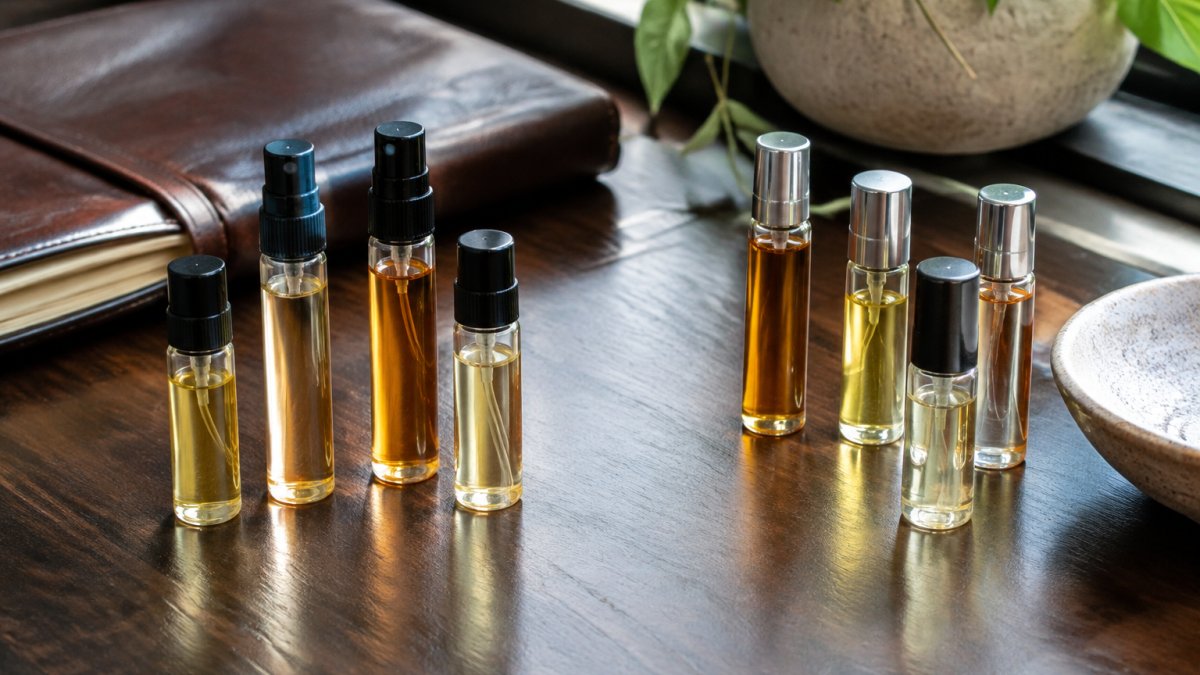
Designer Side: Banana Republic 17 Oud Mosaic and Bvlgari Aqva Pour Homme Marine
Banana Republic 17 Oud Mosaic proves the designer side isn't simple. It treats oud as a fresh, airy accord of plum, cardamom and Turkish rose over amber and musk. Bvlgari Aqva Pour Homme Marine is the classic designer move: grapefruit, neroli and seawater, built to be a crowd-pleaser. You can sample the 17 Oud Mosaic decant or try the Aqva Marine decant before committing.
Niche Side: By Kilian Angels' Share and Creed Green Irish Tweed
By Kilian Angels' Share is niche indulgence: cognac, cinnamon and tonka melting into sandalwood and praline. Creed Green Irish Tweed is the opposite register, an iris and violet-leaf composition with ambergris and sandalwood. Try the Angels' Share decant or order the Green Irish Tweed decant and judge the projection yourself.
Price, Concentration, and the Price-to-Value Ratio
Higher price does not automatically mean higher fragrance concentration, and it never has. The price gap between the two categories is driven by four separate cost buckets, and only one of them is the juice itself.
1. Aromatic material cost. Fragrance oil is priced by the kilo, and the spread is enormous.
2. Concentration. Concentration ranges vary by formulation. Concentration is a formulation choice rather than a category badge, and the ranges overlap between designer and niche releases. Concentration is a formulation choice, not a category badge.
3. Packaging and scarcity. Heavy glass, magnetic caps, hand-finished boxes, and small production runs all add per-unit cost that has nothing to do with how the scent performs. Limited distribution also means fewer units to amortize fixed costs across.
4. Marketing and volume. Designer houses amortize enormous campaign budgets across millions of units, which pushes per-bottle marketing cost down.
| Factor | Designer | Niche |
|---|---|---|
| Distribution | Broad retail availability | Selective, limited doors |
| Batch size | Large batch production | Small artisan runs |
| Typical brief | Mass appeal | Fringe tastes, olfactory art |
| Concentration | Commonly 5-20% oil | Commonly 10-30% oil, wide overlap |
| Price driver | Marketing budget, volume | Materials, scarcity, packaging |
| Best entry point | Cheap decant | Cheap decant |
How to actually judge price-to-value. Stop comparing sticker price to sticker price and start comparing cost per wear.
Watch out: assuming a higher price tag guarantees higher oil concentration or better performance. Read the concentration on the box (EDT, EDP, extrait) and judge on skin over a full wear, not on the price.
L'Epoque Delusions of Grandeur – Decant →
Best Long Lasting Niche Perfumes and What Longevity Really Depends On
Scent longevity depends on concentration, base notes and skin chemistry rather than on the niche label. A heavy amber or oud base clings for hours; a bright citrus top notes structure fades fast in any category. If performance is your priority, read our guide to the best long lasting niche perfumes for a performance-first shortlist.
Olfactory fatigue is the part most people miss. Your nose stops registering a scent you wear daily long before the fragrance has actually died, which is why testers swear a scent vanished by noon. Rotate your rotation and judge longevity on skin, not on memory.
Niche vs Designer vs Dupe: Where the Copycats Fit
The niche vs designer vs dupe triangle is really a question of where the value sits. A dupe copies a recognizable olfactory profile at a low price, but usually with cheaper synthetic vs natural materials and weaker scent composition. It can be a fine way to test whether you even like a profile.
What most guides miss is that a dupe is not a substitute for scent education. Spraying a clone teaches you the shape of a fragrance; wearing the original teaches you its texture, its drydown and its sillage. Buy the dupe to explore, buy the decant to know.
Niche Perfume Brands Worth Knowing and the Masstige Lines Blurring the Line
Niche perfume brands worth knowing include houses like By Kilian, Creed, and Escentric Molecules. But the more useful story for anyone comparing niche versus designer fragrance is the one most guides skip: the categories are converging, and the convergence runs in both directions.
Designer Private Collections: Niche Behavior at Designer Scale
Major fashion houses now run premium "private" or "exclusive" lines that behave like niche houses: selective distribution, higher concentrations, perfumer-led briefs, and prices that rival independent perfumery. These lines exist precisely because the parent brand wants the margin and prestige of niche without giving up conglomerate scale. The practical effect is that the old shortcut, "designer means mass appeal, niche means artistry", fails on the shelf. A private-collection release from a fashion house can be more adventurous than a safe release from a small independent.
This is the masstige layer: premium lines priced above the core designer range but below true artisanal pricing, marketed with the vocabulary of niche. When you shop, the label on the bottle tells you less than the concentration, the perfumer credit, and the distribution channel do.
Sustainability and Supply-Chain Transparency
Sourcing practices differ across fragrance houses, and transparency varies widely.
Neither automatically means an ethically superior bottle. If sourcing matters to you, ask specific questions, which materials are natural versus synthetic, where the oud or iris is sourced, whether the house publishes a restricted-substances list, rather than trusting the niche or designer label to answer for you.
What This Means for the Buyer
The blur is good news for shoppers. You no longer have to pick a camp to get interesting perfumery, and you no longer have to pay niche prices to get niche-style briefs. Judge each release on its own terms: concentration, perfumer, distribution, and how it wears on your skin. The category is a starting point for navigation, not a verdict.
Try Before You Commit With a Decant
Buying a full bottle on a blind buy is the most expensive mistake in fragrance. A decant lets you live with a scent for weeks, test its projection in real conditions and learn your own taste before spending on a full bottle. That is exactly why we built Olfactory Outlaws around dynamic decants, curated edits and concierge guidance for people who don't yet know their niche from their designer.
Our team can point you toward a signature scent, ship decants from rare fragrance houses, and let you explore through the monthly Bounty Box subscription.
Frequently Asked Questions
What is the difference between niche and designer fragrances?
The core difference is scale and intent. Designer fragrances come from fashion or beauty houses and are built for mass-appeal, wide distribution, and high shelf turnover. Niche fragrances come from smaller fragrance houses, are often perfumer-led, and target narrower tastes. Niche scents often use a higher aromatic load than designer scents, though that gap alone does not guarantee a better scent.
Do niche perfumes last longer than designer perfumes?
Not automatically. Higher fragrance concentration can support longer wear, but longevity depends on your skin, the base notes, and how the composition is built. Niche status alone does not guarantee longer wear. When hunting for the best long lasting niche perfumes, look at base notes like amber, musk, oud, and sandalwood rather than the label.
Is Dior niche or designer?
Dior is a designer house. Its fragrances sit in the luxury segment but are produced and distributed at mass-market scale, with large marketing budgets and retail availability in department stores. Dior's private or exclusive lines move closer to niche positioning, which is exactly why the line between the two categories has blurred in recent years.
Are niche fragrances worth the higher price?
It depends on what you want from a scent. Niche pricing reflects smaller batch production, exclusivity, and often more unusual scent composition. If you want a signature scent that few people around you wear, the price-to-value ratio can work in your favor. If you want a reliable crowd-pleaser for daily wear, a designer bottle delivers more per dollar. Decants let you test the expensive side before committing.
How do niche vs designer vs dupe fragrances compare?
Niche and designer are both original compositions, differing mainly in scale and intent. A dupe is a copy built to mimic a recognizable scent using cheaper materials and a similar fragrance pyramid. Dupes can get you close on top notes, but they usually fall short on base notes, sillage, and projection. If originality matters to you, a decant of the real thing costs less than a full bottle and tells you far more.
What are some examples of niche and designer fragrances?
On the designer side, Banana Republic 17 Oud Mosaic and Bvlgari Aqva Pour Homme Marine show how mainstream houses handle oud and aquatics. On the niche side, By Kilian Angels' Share and Creed Green Irish Tweed show the perfumer-led approach: boozy gourmand warmth and a green, iris-forward classic. Smelling a pair side by side teaches you more about the niche vs designer split than any definition.
The challenge is simple: stop buying bottles you haven't lived with. Start with a decant, wear it for a week, and let your nose decide. Get started with Olfactory Outlaws and build a collection you actually wear.
