

Quick Summary
Buying perfume on secondary marketplaces can be done safely, but the risks are real because you cannot smell or inspect the bottle before paying. Verify the seller's history, request current photos of the bottle and batch code, compare the price against the market, and pay through a method that holds funds until delivery.
- Counterfeit and mislabeled products are a documented problem on secondary marketplaces.
- Request photos of the label, base, batch code, cap and atomizer before paying.
- Treat a listing priced far below the going rate as a warning sign.
- Favor platforms that hold payment until you confirm the item arrived as described.
- Inspect and photograph the bottle on arrival, since dispute windows are often short.
Table of Contents
- What Secondary Marketplaces Are and Where the Risk Comes From
- Pros and Cons of Buying Perfume on Secondary Marketplaces
- How to Identify Authentic Perfume Before You Pay
- Signs of Fake Perfume to Watch For in Listings and Bottles
- Marketplace-by-Marketplace Comparison of Buyer Protections
- Best Practices for Buying Used Fragrance Safely
- Your Next Step: Choosing Where to Buy with Confidence
- Frequently Asked Questions
What Secondary Marketplaces Are and Where the Risk Comes From
Secondary marketplaces are platforms where individual sellers, resellers and discounters list fragrances they did not buy directly from the brand. The category covers used full bottles, partially used bottles, decants and sealed bottles resold at prices that can sit well below retail. Some platforms verify sellers and products, while others act as open classifieds with little oversight.
The risk comes from three places. First, you cannot smell the product before you pay, so a fake or degraded bottle can look identical to the real thing in photos. Second, the seller's stock may have been stored in heat or sunlight, which changes how a fragrance smells over time. Third, many discounters are not authorized retailers for the brands they sell.
Because perfume is a consumer product rather than a regulated medicine, a general safety statement from the industry does not tell you whether a particular secondhand bottle is authentic or properly stored.
Pros and Cons of Buying Perfume on Secondary Marketplaces
The upside is real. Secondary marketplaces give you access to discontinued releases, limited editions and niche houses that have sold out at retail. Prices are often lower than retail, which is why many buyers use resale to test a scent before committing to a full bottle.
Pros:
- Access to discontinued and sold-out fragrances
- Prices that can undercut retail, especially on used or partly used bottles
- Ability to sample scents through decants before buying a full size
- Larger selection than most single retailers stock
Cons:
- No way to smell or inspect the bottle before paying
- Counterfeit and mislabeled products are a documented problem
- Storage history is often unknown, and heat or light can degrade the fragrance
- Buyer protection varies widely between platforms and individual sellers
The trade-off is straightforward. The lower the price relative to the brand's current retail, the more verification you should demand before paying. Treat unusually cheap listings as a warning sign rather than a bargain.
How to Identify Authentic Perfume Before You Pay
Most counterfeit warnings stop at "check the packaging." That is not actionable when you are looking at phone photos of a bottle in a stranger's hand.
Step 1: Screen the seller's history. Check account age, completed transactions and the pattern of reviews, not just the star rating. Read the negative reviews for complaints about fakes, leaking bottles or misdescribed fill levels, because those are the failure modes that matter here.
Step 2: Demand photos of the actual bottle. Stock images copied from the brand's website tell you nothing about the item in the seller's possession.
Step 3: Compare the batch code and label details. Perfume batch codes are typically a short alphanumeric string stamped or printed on the bottle base and often repeated on the box.
Step 4: Inspect the hardware. Look at the cap fit and the atomizer. A loose, wobbly or poorly seated cap suggests a rushed product. Compare the spray nozzle and collar with photos of genuine bottles, since spray quality and nozzle design are difficult to replicate exactly.
Step 5: Check the price against the market. A bottle listed far below the going rate for that size and condition is the most common red flag in this category.
Step 6: Confirm the scent story. If the seller offers a decant or sample, treat a harsh, chemically sharp or unusually short-lived scent as a warning. Fakes often smell harsher or fade faster than the original.
A quick pre-purchase checklist:
- Seller history reviewed, including negative reviews
- Current photos of label, base, batch code, cap and atomizer received
- Batch code format compared with the brand's known format
- Label and packaging details compared with a verified reference
- Price compared with current retail and completed sales
- Storage history and opened/sealed status confirmed in writing
- Payment method chosen that preserves a dispute path
Watch out: a seller who refuses to provide additional photos, pressures you to pay off-platform or claims the batch code is "not visible" on a bottle that should show one is giving you reasons to walk away, not to negotiate.
If you are unsure which fragrance suits you, book a consultation with our team to narrow down your options before you spend anything.
The article's pre-purchase process comes down to six checks you can run before any money moves.
| Step | What to do | Red flag |
|---|---|---|
| Screen seller history | Check account age, completed transactions and negative reviews | New account listing several high-value bottles |
| Demand photos of the actual bottle | Ask for label, base, batch code, cap and atomizer photos | Stock images copied from the brand's website |
| Compare batch code and label | Match code structure and print quality to the brand's known format | Misspellings, off-center text, mismatched box colors |
| Inspect the hardware | Check cap fit and spray nozzle against genuine photos | Loose or wobbly cap |
| Check the price against the market | Compare with current retail and completed sales | Price far below the going rate |
| Confirm the scent story | Treat harsh, sharp or short-lived scent as a warning | Fades quickly or smells chemically sharp |
Signs of Fake Perfume to Watch For in Listings and Bottles
Counterfeit fragrances are often close enough to pass a casual glance, so focus on details that are hard to copy. Inconsistent print quality on the label, misspelled words, off-center text, and mismatched colors between the box and bottle are common tells. Check the cap fit: a loose, wobbly or poorly seated cap suggests a rushed or low-quality product.
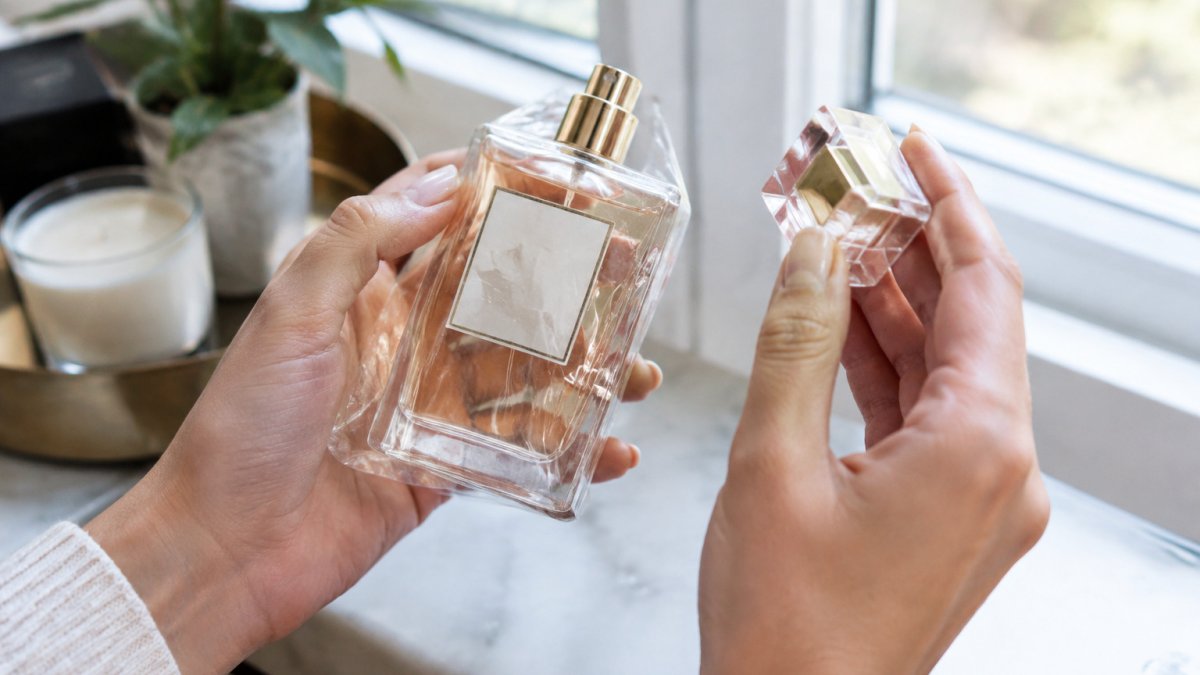
Packaging deserves a close look. Authentic bottles usually come with clean, precisely applied cellophane and secure seals. Missing or badly applied shrink wrap, glue residue and damaged cartons all deserve scrutiny. Compare the atomizer and spray nozzle with photos of genuine bottles, since spray quality and nozzle design are difficult to replicate exactly.
Scent itself can also signal a problem. Fakes often smell harsher, shorter-lived or noticeably different from the original. If a seller offers a sample and the fragrance fades quickly or smells chemically sharp, treat the bottle as suspect.
Marketplace-by-Marketplace Comparison of Buyer Protections
Buyer protection is not a single feature you either have or lack. It is a stack of mechanisms, and each platform assembles that stack differently. The practical question is not which marketplace is "safe" but which combination of payment hold, dispute process, return window and seller verification applies to the specific listing you are considering.
Payment hold and escrow. The strongest protection is a platform that holds the seller's money until you confirm the item arrived as described. On platforms built around managed payments, funds are typically released after a set window or after you mark the order complete.
Return windows and dispute deadlines. Protection is time-bound. Managed marketplaces commonly give buyers a window measured in days after delivery to open a case, and the clock often starts at the carrier's delivery scan rather than when you open the box.
Seller verification and authentication programs. Some platforms run seller-verification steps such as identity checks, transaction-history thresholds or mandatory authentication before an item ships. Authentication programs typically route the bottle through a third-party inspector who checks packaging, batch code and physical characteristics before release.
Counterfeit and prohibited-item policies. Platforms differ in whether they explicitly prohibit counterfeit or unauthorized goods and how aggressively they enforce it. A stated policy is only as useful as the reporting path behind it.
How to compare platforms for a specific purchase. Before you pay, answer five questions in order:
- Does the platform hold payment until delivery, or does the seller receive funds immediately?
- What is the exact deadline to open a dispute, and does it start at shipping or at delivery?
- Is there an authentication step, and does it apply to this listing or only to certain categories?
- What evidence does the platform require for a counterfeit claim, such as photos, batch-code comparison or a third-party opinion?
- If the platform declines to intervene, what is left, such as a payment-card chargeback or a payment-app dispute?
Watch out: a platform's general buyer guarantee often excludes items that were accurately described as used or opened, so a bottle that arrives genuine but more worn than you expected may fall outside the protection you were counting on.
A useful rule is to favor transactions where your payment is held until you confirm receipt and where a documented path to a refund for counterfeits exists. Avoid direct payment methods that give you no recourse if a bottle arrives fake.
Best Practices for Buying Used Fragrance Safely
Buying used fragrance safely starts with condition. Ask the seller for the fill level, usually shown as a percentage of the original volume, and compare it to the photo. Large gaps between the liquid and the cap can indicate evaporation, which is a sign of age or poor storage.
Storage matters as much as age. Fragrance that has sat in heat or direct sunlight can change character and lose its top notes. Ask how the bottle has been kept, and factor that into your price. A partly used bottle stored well may be a better buy than a sealed one that spent years in a hot warehouse.
Keep your records. Save the listing, photos and messages, and document the bottle when it arrives. Open it in a well-lit space, photograph the packaging, and check the batch code against the listing. If anything is wrong, report it through the platform quickly, because refund windows are often short.
Your Next Step: Choosing Where to Buy with Confidence
If you want to buy fragrance without gambling on a stranger's bottle, the safest route is a seller that controls authenticity from start to finish. At Olfactory Outlaws, we curate our catalog of premium and niche fragrances and offer expert-led guidance, so you can explore new scents with confidence. Browse the catalog to see what we have in stock, and check the decant guide to understand how long your scent will last once it reaches you.
Whichever route you choose, verify before you pay, document everything and never let a suspiciously low price override your judgment.
Frequently Asked Questions
How can I tell if a perfume is authentic before buying?
Start with the seller. Look for a track record of verified sales, detailed listing photos of the actual bottle, batch codes and sealed packaging. Compare the price with the brand's typical retail range. A price far below what authorized retailers charge is a warning sign. Ask for close-up photos of the box, cap, label and batch code before paying. Sellers with legitimate stock usually provide them without hesitation, and those who refuse should be avoided.
What are the common signs of counterfeit perfume?
Counterfeit bottles often show spelling errors on labels, uneven or sloppy printing, cellophane that looks loose or misaligned, and caps that do not fit the bottle neatly. The spray nozzle may feel cheap, and the scent may smell harsher or change quickly on skin. Batch codes that do not match the brand's format or are missing are another red flag. No single sign proves a fake, so check several together.
Is it safe to buy partially used perfume bottles?
Partially used bottles carry more uncertainty than sealed ones. Check the fill level against the bottle's normal capacity, since a large drop may signal evaporation from poor storage or heat exposure. Ask how the bottle was stored. Scent can degrade over time, and a bottle kept in a hot car or bright window may smell different from a new one. Buy from a seller who offers a return policy if the bottle does not match its description.
What protections do secondary marketplaces offer against fake goods?
Protections vary by platform. Many offer buyer protection programs that allow refunds if an item is not as described, and some use authentication reviews. Payment methods that support chargebacks or dispute resolution add another layer. Read each platform's policy before buying, and keep messages and photos as records. Protection rarely covers a bottle you have already opened and used, so act quickly if something seems wrong.
