

Last Updated: November 1, 2026
Quick Summary
Build a fragrance collection by sampling scents through decants before buying full bottles, then choosing a signature scent through repeated everyday wear. Fill distinct roles in a small capsule of four to six bottles, and set a monthly budget so purchases stay deliberate.
- Test three to five scents from one family on your skin for a full day before buying.
- Judge a fragrance by its dry-down, since a paper strip cannot show how it develops.
- A City Rhythm Manhattan decant costs $16.00, far less than a full bottle.
- Keep four to six bottles in a capsule, each covering a distinct role or occasion.
- Cap full bottles at six or eight, and let one leave before a new one arrives.
Table of Contents
- Start With Samples and Decants Before Buying Full Bottles
- How to Choose a Signature Scent
- Understanding Fragrance Families, Concentrations, and Notes
- Building a Fragrance Capsule Wardrobe
- Versatile Fragrances for Every Occasion and Season
- Setting a Realistic Budget and Avoiding Overconsumption
- Storing Your Collection and Making Your First Purchase
- Frequently Asked Questions
Start With Samples and Decants Before Buying Full Bottles
Building a fragrance collection is easier when you don't start with a full bottle.
Think of the first stage as research rather than shopping.
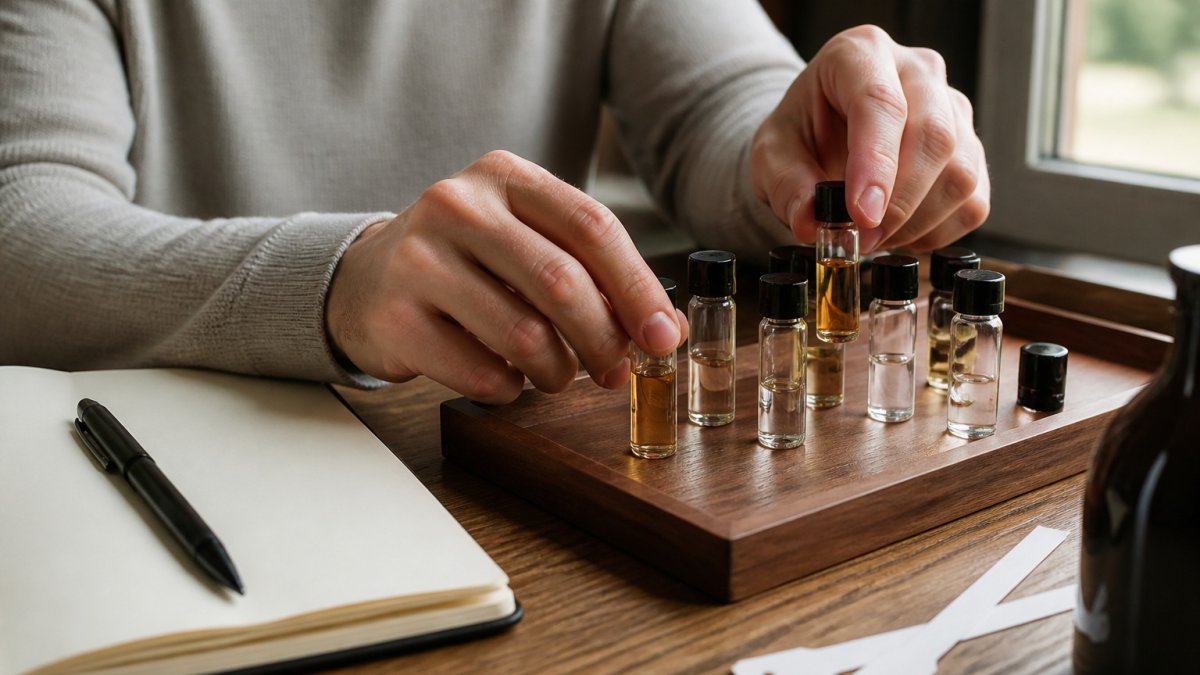
Here is a simple sampling method you can follow:
- Pick three to five scents from the same family, such as citrus, woody, or amber, so you can compare like with like.
- Spray one scent on your wrist and one on the inside of your elbow, then leave the bare skin unwashed for the day.
- Note how each scent opens, how it feels at midday, and how it smells at the end of the day.
- Wear the strongest one again on a different day and in a different setting before deciding.
Budget-conscious buyers often start with a decant of City Rhythm Manhattan - Decant at $16.00, a tobacco-and-spice scent that shows how a niche composition develops.
A common mistake is buying a full bottle after one spritz in a store. Skin chemistry changes how a fragrance smells, so a scent that suits a friend may not suit you.
How to Choose a Signature Scent
A signature scent is the fragrance people associate with you, and it is the anchor of any collection. Most people find theirs by repeatedly wearing a small set of candidates in ordinary daily life rather than by searching for a single perfect match.
Start by listing the moments you dress for: work, dinner, weekends, and formal events. The scent you reach for most often in those settings is a strong candidate. Pay attention to the feedback you get, too.
Your personal taste matters more than trend lists. If you gravitate toward fresh citrus, a bright cologne will likely feel more natural than a dense resin.
Understanding Fragrance Families, Concentrations, and Notes
Fragrance families group scents by their dominant character, such as fresh, floral, woody, oriental, or fresh spicy.
Concentration changes how strongly a scent projects. Eau de toilette is generally lighter than eau de parfum, which is typically richer. Concentration does not guarantee quality, so compare scents within the same concentration when testing.
Notes are the individual ingredients you smell, arranged in top, heart, and base layers. Our guide to identifying fragrance notes explains the olfactory pyramid in more depth and shows how to train your nose.
Fragrance houses such as Nobile 1942 Estroverso - Decant show how notes combine. This citrus-and-woods scent opens with mandarin, orange, and lemon, then settles into cedar and patchouli.
Building a Fragrance Capsule Wardrobe
A fragrance capsule wardrobe is a small, deliberately chosen set of scents that covers your real life.
The goal is coverage without duplication. Before adding a new bottle, check whether an existing scent already fills the same role. If two fragrances smell alike and serve the same occasion, one of them is surplus.
Keep a short list of roles you need filled, then match scents to those roles. This keeps the collection purposeful and prevents impulse buys from crowding out the scents you actually wear.
Versatile Fragrances for Every Occasion and Season
Some scents work across many settings, while others suit one specific occasion. Fresh and citrus scents tend to fit daytime and warm weather, and warm spicy or vanilla scents tend to suit evenings and cooler months.
Seasonal rotation keeps a collection balanced. Heavier, richer scents usually feel better in winter, when the air is dry and cold, while lighter scents often feel more comfortable in heat and humidity. Rotating scents also means each bottle is worn less often, which helps the collection last.
City Rhythm Manhattan – Decant →
For a date night, pick a scent with warmth and depth. For a workday, choose something clean and understated that does not fill a shared room. The right choice depends on your environment as much as your taste.
Setting a Realistic Budget and Avoiding Overconsumption
Most guides tell you fragrance is expensive and then move on. A workable plan is more useful than a warning. Treat your collection like a small portfolio: set a monthly ceiling, split it between sampling and bottles, and buy in a deliberate order.
A simple structure that many collectors use:
- Set a monthly sampling allowance. Decide on a fixed dollar amount you are comfortable spending on decants and discovery sets each month. Keep it separate from your bottle fund so sampling never eats into a planned purchase.
- Set a bottle fund with a trigger. Route a smaller amount each month into a fund that only unlocks when a decant has passed your wear test. This prevents the common pattern of buying a full bottle in the same week you first smell it.
- Prioritize by role, not by hype. Buy the scent that fills an empty role in your capsule first, a daily fresh scent before a second evening scent, for example. New releases and limited editions are the last priority, not the first.
- Cap the collection. Pick a number of full bottles you are willing to own, such as six or eight, and treat it as a hard ceiling. When you want a new bottle, one must leave first. This single rule does more to prevent overconsumption than any amount of willpower.
Concrete price anchors help you plan.
Track what you actually wear. Keep a simple note on your phone with the date you last wore each bottle. Anything that has gone two or three months without a wear is a signal that your budget is flowing to the wrong scents, and it is the first candidate to sell or swap before adding something new.
Finally, decide in advance what "complete" looks like. For most people a collection is complete when every role in their capsule is filled and every bottle gets regular wear. Reaching that point is a success, not a reason to keep shopping.
The budget guidance is easier to scan at a glance, so here are the key figures and actions in one place.
| Item | Value | Note |
|---|---|---|
| Bottle cap | Six or eight | Hard ceiling on full bottles owned |
| Manhattan decant | $16.00 | Tobacco-and-spice, 10ml enough to judge |
| Wildbloom decant | $8.00 | Designer floral-fruity profile |
| By The Fireplace decant | $15.00 | Smoky gourmand, several wears |
| Purchase rule | Spend no more on a bottle | Than already spent sampling that scent |
| Idle bottles | Two or three months | Signal to sell or swap first |
Storing Your Collection and Making Your First Purchase
Fragrance is a perishable product, and how you store it determines how long it stays true. The three enemies are light, heat, and air. Ultraviolet light breaks down aroma compounds, heat accelerates chemical changes, and oxygen oxidizes the juice every time the bottle is opened.
A few practical rules:
- Keep bottles in their original boxes if you have the space. The box blocks light and slows temperature swings.
- Store upright and tightly capped. A loose cap lets alcohol evaporate and concentrates the remaining juice, which shifts the scent.
- Avoid the refrigerator. Condensation and food odors are a bigger risk than the modest cooling benefit.
- Keep decants capped and labeled. Small vials oxidize faster than full bottles because they hold more air relative to liquid, so plan to use them within a reasonable window rather than letting them sit for years.
Shelf life varies by concentration and storage. As a general expectation, a well-stored eau de toilette may stay enjoyable for a few years, while a richer eau de parfum often holds up longer. Citrus-forward scents tend to fade soonest, and resinous or woody bases tend to age more gracefully.
When you make your first full-bottle purchase, let the decision be boring. Choose the scent that has already proven itself across several wears and at least two different occasions, and that fills a clear role in your capsule. Start with one bottle, wear it for a few weeks, and only then decide what the next role needs. A decant such as Hermetica Tonkandy - Decant, a gourmand spicy scent at $15.00, lets you test a richer profile before deciding whether a full bottle belongs in your wardrobe.
A first purchase checklist:
- You have worn the scent at least three times, including once in the setting you plan to wear it most.
- You still enjoy the dry-down, not just the opening.
- The scent fills a role no current bottle covers.
- The purchase fits inside your bottle fund without borrowing from next month.
Browse the full guide on how to choose perfume for gifts and the fragrance decant storage guide to keep building your collection with confidence.
Frequently Asked Questions
How do you start a fragrance collection?
Start with a small group of fragrances you already enjoy, then sample a few new ones before committing. Decants priced from $8.00 to $16.00 at Olfactory Outlaws let you test a range of scents without buying full bottles. Keep notes on how each one smells on your skin during the day, and note which ones you reach for. Those notes will show you which families and notes you actually like, which makes your next purchase far more likely to be a keeper.
How many fragrances should a beginner own?
Many beginners do well with three to five fragrances that cover different roles: one everyday scent, one for work or daytime, one for evenings, and one for a special occasion. Owning more than that early on often leads to overlap and unused bottles. Build slowly, wear each scent for a few weeks, and add a new one only when you can name a gap it fills. A smaller, well-chosen collection is easier to use and enjoy.
How do you choose a signature scent?
A signature scent is one you enjoy consistently and that suits your skin chemistry, lifestyle, and personal taste. Test candidates on skin rather than paper, wear each for at least a full day, and pay attention to the dry-down, which is the scent that remains after the top notes fade. Ask yourself whether you still like it hours later and whether people compliment it. Narrow your choices to two or three finalists and live with them for a week before deciding.
Should you buy fragrance samples or full bottles first?
Samples or decants are the safer starting point, especially for niche fragrances that cost more per milliliter. A full bottle makes sense only after you have worn a scent several times and know it performs well on your skin across different days and weather. Olfactory Outlaws offers decants such as Nobile 1942 Estroverso Decant at $16.00 and Hermetica Tonkandy Decant at $15.00, which let you evaluate a scent before committing to a larger purchase.
How can you build a fragrance collection on a budget?
Set a monthly or per-purchase limit and stick to it. Start with decants, which cost far less than full bottles, and rotate them rather than buying every new release. Prioritize filling gaps in your wardrobe instead of chasing trends. Avoid buying duplicates that smell similar to something you already own. A few deliberate purchases over a year will usually build a more satisfying collection than frequent impulse buys.
How should you store a fragrance collection?
Store bottles upright in a cool, dark place away from direct sunlight, heat, and bathroom humidity, since these conditions can degrade fragrance over time. A closet shelf or drawer typically works well. Keep caps tightly closed and avoid leaving bottles near windows or radiators. Proper storage helps protect the scent profile so fragrances you buy now still smell the way they should months later.
