

Last Updated: November 12, 2026
Quick Summary
Niche perfumes are worth the price when the scent earns it on your skin, not when the bottle or marketing says so. Higher prices come from materials, small batches, limited distribution, and positioning, so test with decants before committing to a full bottle.
- Designer budgets go to celebrity contracts and shelf space; niche budgets concentrate on raw materials and small-batch production.
- A $90 designer bottle costs about $0.08-$0.09 per spray versus $0.25-$0.30 for a $300 niche bottle.
- A higher-priced bottle worn constantly can beat a cheaper bottle worn twice a year on cost per use.
- Apply decants to skin and test across three or four wearings before deciding on a full bottle.
- The Monthly Bounty Box delivers one premium 10ml decant plus two samples each month for $35.
Table of Contents
- The Real Question Behind Niche Perfume Pricing
- Niche Perfumes vs. Designer Perfumes: What Actually Differs
- Why Niche Perfumes Are Expensive
- Cost Per Wear: The Comparison Table Nobody Shows You
- Niche Perfume Samples and Decants: The Low-Risk Way to Test
- Affordable Niche Fragrance Brands That Still Deliver
- A Decision Framework by Buyer Type
- Building Your Discovery Set with Olfactory Outlaws
- Frequently Asked Questions
The Real Question Behind Niche Perfume Pricing
Most people asking are niche perfumes worth the price already know what a $300 bottle smells like. The real question is whether the extra money buys something a $90 designer bottle can't.
Niche perfume is fragrance produced by houses that focus on scent rather than fashion lines, accessories, or celebrity licensing. That definition matters because it explains the pricing without flattering it. A niche house isn't inherently better at perfumery.
Below, we'll break down where the money actually goes, what performance testing reveals, and how to decide with your own nose instead of a review thread.
Niche Perfumes vs. Designer Perfumes: What Actually Differs
The core difference isn't quality. It's who signs off on the formula. Designer fragrance is a marketing product attached to a fashion brand, so the scent must appeal to a very broad audience to justify shelf space in department stores. Niche fragrance is a product-first release, which allows for narrower, stranger, more specific compositions.
That creative freedom shows up in the scent profile. Niche houses can release an oud-heavy composition, a photorealistic fig, or a scent built around one unusual raw material, because they don't need millions of units sold. Designer releases usually aim for mass appeal first and distinctiveness second.
Where the Money Goes in Each Category
Designer budgets spread across celebrity contracts, global advertising, and department store placement. Niche budgets concentrate on raw materials, small-batch production, and limited distribution. Neither is automatically a better deal. They're just spending on different things, and only one of those things ends up on your skin.
Why Niche Perfumes Are Expensive
Higher prices come from four places: ingredient cost, batch size, distribution, and margin structure. A niche house buying a rare natural material in small quantities pays far more per kilogram than a designer brand buying synthetics at industrial volume. Small-batch production adds cost per unit. Limited retail channels remove the volume discounts that come with mass distribution.
Ingredient quality is real but oversold. Plenty of niche releases lean heavily on synthetic ingredients too, and that's not a flaw.
Price Drivers vs. Marketing Markup
Here's the part most guides skip. Some of a niche bottle's price reflects genuine cost, and some reflects positioning.
To make that judgment, separate the price into buckets you can actually reason about:
- Materials. Natural absolutes and rare woods cost more per kilogram than common synthetics, but the amount of any single material in a 100ml bottle is small. Material cost rarely explains a four-figure price on its own.
- Batch size and production. Small runs mean higher per-unit cost for bottling, labeling, and quality control. This is a real driver, and it scales with how small the house runs.
- Distribution. Limited retail channels and direct-to-consumer shipping remove the volume discounts department stores negotiate. You pay for the smaller pipeline.
- Brand and packaging. Bottle design, boxes, and scarcity signaling are positioning costs. They are legitimate business expenses, but they do not change how the fragrance performs on your skin.
- Retailer margin. Every layer between the house and you takes a cut. Buying a decant or a direct sample removes several of those layers, which is why the same juice can feel far cheaper in small format.
A useful rule of thumb: the further a price sits above what the materials and batch size plausibly justify, the more of that price is positioning. That is not automatically a reason to walk away.
Watch out: treating every high price as proof of superior ingredients, or every high price as pure markup, are both shortcuts that skip the actual question. The only reliable test is wearing the scent and comparing it against cheaper options on your own skin.
Cost Per Wear: The Comparison Table Nobody Shows You
Price per bottle tells you almost nothing. Price per wear does.
The method is simple: divide the bottle price by the number of sprays it contains, then multiply by the sprays you actually use per wearing.
| Factor | Designer Example | Niche Example | What It Means for You |
|---|---|---|---|
| Full bottle price | $90 for 100ml | $300 for 100ml | Entry cost, not true cost |
| Estimated sprays per bottle | ~1,000-1,200 | ~1,000-1,200 | Same format, same spray count |
| Cost per spray | ~$0.08-$0.09 | ~$0.25-$0.30 | The real unit price |
| Sprays per wearing | 3-5 | 2-4 | Concentration changes application |
| Cost per wearing | ~$0.24-$0.45 | ~$0.50-$1.20 | What one day of scent costs |
| Wear frequency | Daily driver | Occasion scent | Daily use drives cost per wear down |
| Decant entry point | Rarely offered | Widely available | Lets you test before committing |
Run the numbers for your own wearing pattern and the gap can narrow more than the sticker price suggests.
Concentration matters here. An eau de parfum or perfume extract often needs fewer sprays to project the same, so a higher-concentration niche bottle can close part of the per-wear gap through application alone.
A higher-priced bottle worn constantly can beat a cheaper bottle worn twice a year on cost per use. If longevity is your deciding factor, our guide to the best long lasting niche perfumes covers which houses actually deliver performance.
Niche Perfume Samples and Decants: The Low-Risk Way to Test
The smartest way to answer this question for yourself is to stop buying bottles until you've worn the scent properly. A decant is a small portion of the original fragrance transferred into a separate vial.
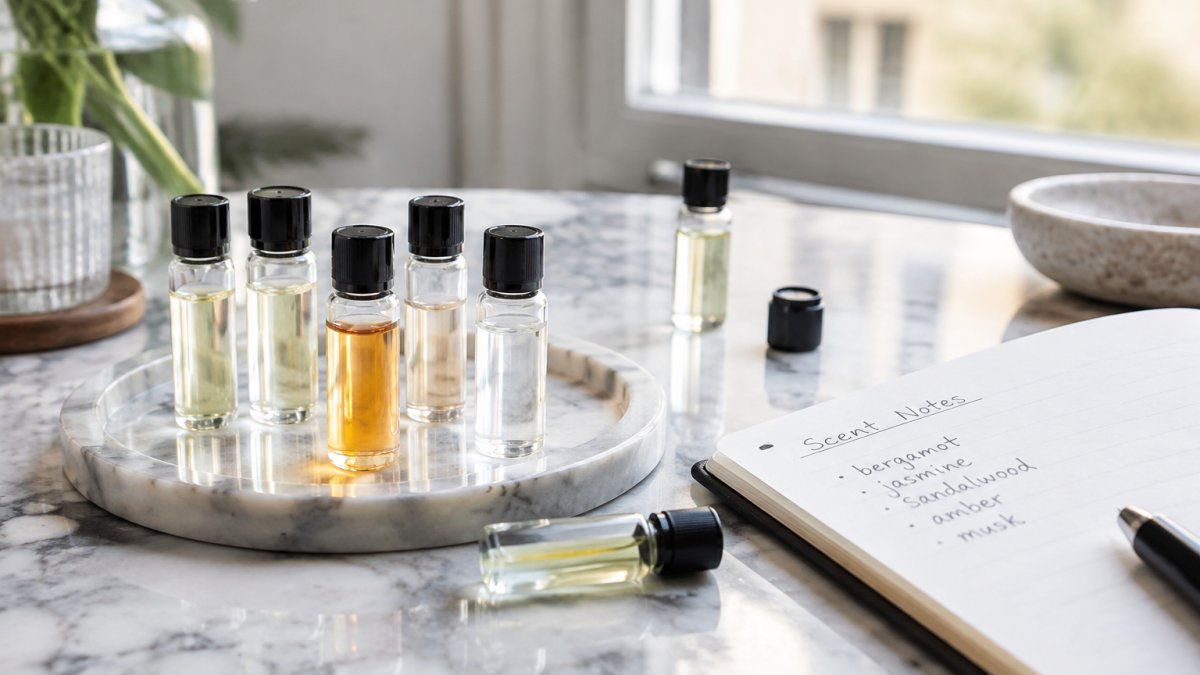
We built our catalog around this idea. You can browse our full selection of niche and designer decants and test a house before spending full-bottle money. If you're wondering how long those vials stay fresh, our breakdown of how long fragrance decants last covers storage and spoilage signs.
How to Run a Fair Wear Test
A wear test only tells you something if you control the variables. Most people test wrong: one spray on a paper strip, a sniff, a verdict.
- Apply to skin, not paper. Skin chemistry changes everything.
- Test one fragrance at a time. Two at once and you'll confuse them.
- Note the opening, the heart, and the dry-down separately.
- Track longevity by the hour, not by memory.
- Wear it in your normal settings, not just at home.
- Log compliments and how often you reach for it.
Do this across three or four wearings before you decide. Watch out: testing on a paper strip and calling it a day is the single most common way people talk themselves out of a fragrance they'd actually love, or into one they'll never wear.
Affordable Niche Fragrance Brands That Still Deliver
Affordable niche exists, but the term needs qualifying. "Affordable" here means under roughly $150 for a full bottle, or a few dollars for a sample. The catch is that cheaper niche often sits closer to designer pricing and designer ambition, which is fine.
Our own decants make this concrete. A Fragrance Du Bois Santal Complet decant is $25. A Xerjoff Alexandria II decant is also $25. On the designer side, a Banana Republic 17 Oud Mosaic decant costs $7, and a Moschino Toy 2 Bubblegum decant is $7. You can judge each on your own skin.
Decant prices for designer and niche fragrances
A Decision Framework by Buyer Type
Skip the abstract debate. Match your situation to a path.
| Buyer Type | What You Actually Need | Recommended Path |
|---|---|---|
| Curious beginner | Low-risk exposure to several houses | Sample set or single decants |
| Daily wearer | One scent you'll use constantly | Full bottle after a decant test |
| Collector | Rarity and house range | Decants first, bottles for keepers |
| Occasion wearer | Distinctiveness over volume | One or two statement decants |
| Gift buyer | Confidence the recipient will wear it | Decant discovery set |
The logic is simple: the less certain you are, the smaller the format you should buy. Certainty is what you're paying for, and decants sell it cheaply.
If you genuinely don't know your scent profile yet, guessing gets expensive fast. That's exactly the situation where a one-on-one session pays for itself, and you can book a fragrance consultation with Justin and Jess to map your preferences before you spend.
Building Your Discovery Set with Olfactory Outlaws
The honest answer to whether niche perfumes are worth the price is that the price is worth it when the scent earns it, and you can't know that from a bottle you haven't worn. Build the evidence first.
Start with a handful of decants across houses and price tiers. Wear each one properly. Keep what you reach for. That process turns a $300 gamble into a series of small, informed decisions, and it's the reason we exist.
If you want a structured way to start, our Monthly Bounty Box subscription delivers one premium 10ml decant plus two samples each month for $35, hand-poured, cancel anytime. It's the lowest-commitment route to finding out which houses suit you before you commit to a full bottle.
The real risk in niche fragrance isn't overpaying for a bottle. It's never testing enough to find the one you'd wear every day.
Frequently Asked Questions
Are niche fragrances worth it compared to designer bottles?
It depends on what you value. Niche perfumes often use higher concentrations of expensive raw materials and give perfumers more creative freedom, which can produce scent profiles you will not find on a department store shelf. But the niche label alone does not guarantee better quality, and some designer releases perform just as well. The practical test is cost per wear: divide the bottle price by the number of sprays you will realistically use. If a $25 decant helps you avoid a $300 full-bottle mistake, the decant already paid for itself.
Why are niche perfumes so expensive?
Several costs stack up. Small-batch production means fewer units absorb the same development and bottling expenses. Rare raw materials like oud, sandalwood, and high-grade floral absolutes cost far more per kilogram than common synthetics. Limited distribution removes the volume discounts that mass-market fragrance houses negotiate. Packaging and retail markup add more. That said, not every dollar goes to ingredients. Brand positioning and marketing budgets also inflate prices, which is why sampling first matters more than trusting the price tag as a quality signal.
Do niche perfumes last longer than designer perfumes?
Not automatically. Longevity depends on concentration, base notes, and your skin chemistry, not on the niche or designer label. Wear time varies from person to person and from scent to scent. Heavier base notes like oud, amber, and musk tend to extend wear time regardless of who makes the bottle. The only reliable answer is a wear test: apply to skin, not paper, and check how the scent develops over a full day before committing to a full bottle.
Should you sample a niche perfume before buying a full bottle?
Yes, and decants make it practical. A full bottle can run several hundred dollars, while a decant lets you wear a fragrance for weeks across different weather and occasions. Test on skin, note how the opening, heart, and dry down evolve, and track how many compliments or second thoughts you get. If you finish the decant and still want more, the full bottle is a justified purchase. If it sits untouched after two wears, you saved yourself a costly blind buy.
What is the most affordable way to explore niche fragrance brands?
Start with a subscription or curated decant set rather than a full bottle. Olfactory Outlaws offers a Monthly Bounty Box at $35 that includes one premium 10ml decant plus two premium samples, hand-poured each month. Individual decants start at $7 for designer scents and $25 for niche houses like Fragrance Du Bois and Xerjoff. This lets you rotate through several houses over a few months and build a clear picture of which scent profiles you actually reach for.
